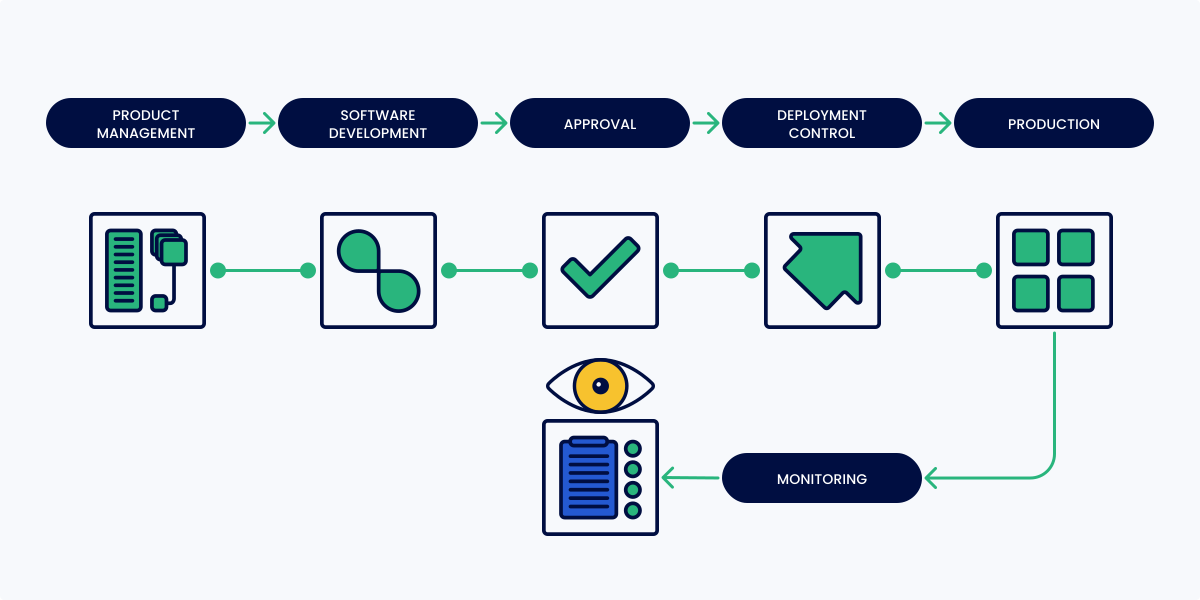
Software Delivery Governance #
Software delivery performance directly correlates with business performance. But for organizations in regulated markets, the biggest blocker to delivery isn’t engineering capacity — it’s governance.
Legacy governance processes slow businesses down, cost them money, and put them at risk. Modern tools and engineering practices have made it possible to ship software at extraordinary speed, but governance has remained static. Most enterprises still rely on IT tickets, human approvers, and Change Advisory Board meetings — governance processes designed for a world where teams deployed monthly, not hourly.
The Three Pillars of Software Governance #
Effective governance, whether manual or automated, must address three fundamental pillars:

1. Define: Have a Process for Managing Risks
Every governance framework starts with documented, standardized processes that explicitly address risks in software development and delivery. This typically takes the form of an SDLC Governance Framework that identifies potential risks and prescribes specific controls to mitigate them. Without clear definitions, controls become subject to interpretation, making consistent implementation impossible.
2. Implement: Follow the Process in Daily Work
A framework documented on paper is meaningless unless consistently executed in practice. This pillar focuses on embedding governance activities into the daily workflow of development teams. When controls are automated they’re followed every time, not only when someone remembers.
3. Prove: Demonstrate the Process Has Been Followed
The final pillar involves demonstrating compliance through verifiable evidence. Auditors and regulators need proof that controls are actually performed, not just policies stating they should be.
Scope #
The scope of this framework covers the entire software development value stream — from requirements through build, release, and runtime.